

Value Engineering procedure
Value engineering can be applied to any product at any stage of development (see chapter 3). There is clear procedure described that has to be followed if we want to call it “Value Engineering” in the end. If we look to the literature about Value Engineering, the authors Venkataraman&Pinto describe one important aspect. They describe the Value Engineering as a process which is a part of value management (Venkataraman & Pinto, 2008) is described as Value Management Process (see Figure 6 Value Management Process, Source of picture: Venkataraman & Pinto, 2008)). This process describes how a value engineering projects can be allocated under the “Value Management” approach, which includes a “Value Planning”, “Value Engineering” and “Value Review” phase. In all this phases also iterations are defined, which reflects the reality of projects affiliated with Value Engineering. These iterations are important because a Value Engineering project will not always a follow a structure like “water fall” from classical project management. Value Engineering requires a own kind of leading and management, according to Venkataraman & Pinto: “Value management is a management approach that focuses on motivating people, developing skills, and fostering synergies and innovation, with the ultimate goal of optimizing overall organizational performance.”[1]. The following figure shows the allocation of value engineering and the steps, which need to be done within value management, approach to run projects where value-engineering methods are applied. Important to mention are the iterations which has to be considered while planning a Value Engineering Program or Project. The iterations are often mandatory because ideas which are created (e.g. idea for realizing function in a different way) has to be checked and analyzed in details before implementation can be planned for example.
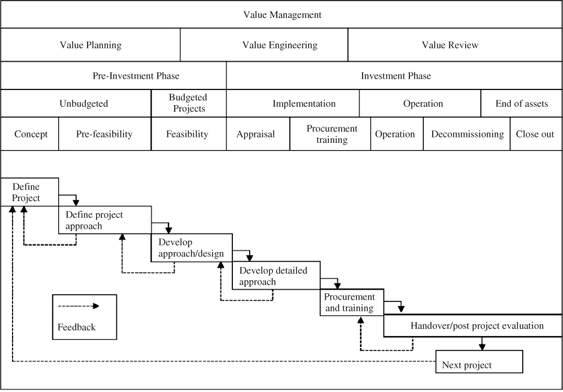
Figure 6 Value Management Process, Source of picture: Venkataraman & Pinto, 2008
Value engineering to a product will be implemented as a project like also illustrated in Figure 6 Value Management Process, Source of picture: Venkataraman & Pinto, 2008). At the beginning the project and approach is defined which is also described as “Value Planning”, during this phase analysis is ongoing and all information will be collected regarding market, customer and competitor situation. Also on important aspect is to analyze the current cost situation of the product, this starts with analyzing the bill of material (“BOM”) for example and ends up to analyze also all costs which comes on top of the pure material costs including labor costs, overhead and depreciation share costs (e.g. from tooling or any other investments).
After the analysis phase, the “real” Value Engineering phase starts with analyzing the functions, developing ideas and first design concepts and the specifications. Value engineering can also implement the concepts created maybe at the beginning of the project (e.g. during the “Value planning phase”) and ensures the feasibility and implementation of ideas created in any phase at the beginning. From own experience, ideas can be created during the whole process and there is no “end” or “due date” for bringing up ideas how to realize a function in other for example more cost efficient way. Like also described in the beginning (Venkataraman & Pinto, 2008) describes a very important aspect of value engineering, it is all about “motivating people, developing skills, and fostering synergies and innovation”[2]. For value engineering, you have to create ideas for implementing functions in a different way.
Out of own experience from the Value Engineering program the ideas can only be created, if the value engineering team is “motivated”, so number one goal for the program lead of a Value Engineering program is to do all they can to motivate the people (e.g. the engineers who are design responsible for example). Further, the value engineering program lead has to ensure that the engineering team can develop their skills and learn more than they knew before; this helps also to ensure motivation of the engineers. According the authors (Venkataraman & Pinto, 2008) the “Value Review” process will be started after implementation of design with activities like procurement and training, with handover (to stake holder) and post project evaluations the Value Engineering project can be closed and next project can be started. The illustration by (Venkataraman & Pinto, 2008) is an example illustration which reflected the own experience while applying value analysis and engineering to products during the Value Engineering program from 2014 to 2017. The “inventor” of Value Engineering Mr. Lawrence D.Miles, a purchase engineer of the General Electric Company in the 1940’s (GEC in USA) who first mentioned value engineering, also reflects this experience:Working instruction for Value Engineering by Lawrence D.Miles (1964):
„1st Phase: Orientation
2nd Phase: Information
3rd Phase: Possibilities
4th Phase: Analysis (Functions etc.)
5th Phase: Program planning (or project planning)
6th Phase: Program execution (or project execution)
7th Phase: Review and Summary“[3]
(Modified from Source: (Marchthaler, et al., 2011))
Only difference to the „Original“procedure to Mr.Miles (1967) is that „Project Planning“ is nearly at the end of working instruction whereas in the Value Engineering methodology standard (EN 12973) the “Project Planning” is described to be done in the beginning. This is a marginal difference, as “Functional Analysis” (è“Thinking in functions”[4]) represents the main principle of Value Engineering. The approach to follow a clear working instruction was by intension to allow everyone from “outside” or “the management” to get a full transparency about the status and progress of the work done (to generate more value).
The engineering standard DIN EN 12973 also describes clearly how the approach must be done to call it Value Engineering according this standard
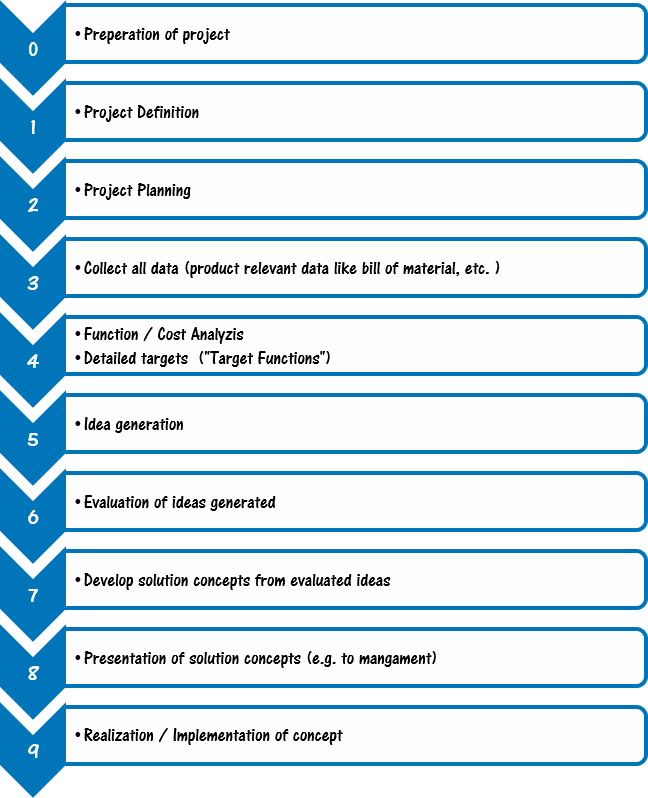
Figure 7 Procedure (working instructions) according to DIN EN 12973, (Wiest & VDI, 2011) modified
The procedure (Step 0 to 9) above are working instructions defined by EN 12973 for application of Value Engineering methodology. In chapter 3. Application of value engineering methodology (Best practice proposal), this procedure will be described based on practical experience.
[1] (Venkataraman & Pinto, 2008)
[2] (Venkataraman & Pinto, 2008)
[3] (Marchthaler, et al., 2011)
[4] (Ammann & VDI, 2011)
References
Ammann, J. M. & VDI, G. P.-. u. P., 2011. Wertanalyse – das Tool im Value Management. 6.Auflage Hrsg. Düsseldorf: Springer.
Venkataraman, R. R. & Pinto, J. K., 2008. Cost and Value Management in Projects. New Jersey: John Wiley & Sons Inc..
Marchthaler, J., Wigger, T., Lohe, R. & VDI, 2011. Wertanalyse – das Tool im Value Management. 6.Auflage Hrsg. Düsseldorf: Springer.